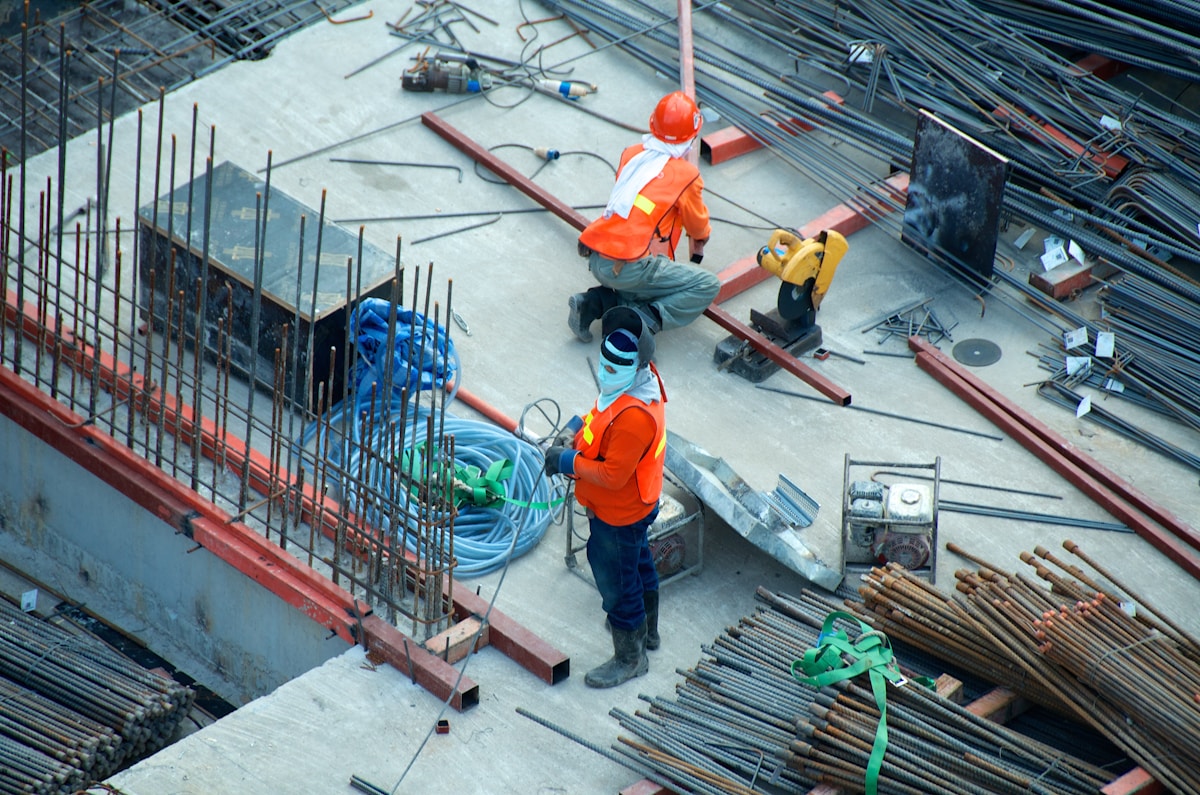
Construction glass damage from razor scratches, fabrication debris, stucco splatter, and welding slag can be professionally restored on site, saving 60-80% vs. full panel replacement. Glass Savers has repaired thousands of damaged panels on commercial projects nationwide since 2008, with typical turnaround in days rather than the 8-16 weeks required for replacement.
* Minimum charge applies: $500 for local jobs in Austin and San Diego; $5,000 for out-of-town projects. Widespread damage priced at $30–$35/sq ft of full panel dimensions.
Prices are ballpark averages — every situation is unique. Contact us for an exact quote.
You're two weeks from turnover. The building looks sharp. Then the owner's rep does a walkthrough and flags forty panels with scratches, splatter, and haze. Your glass company quotes six figures to pull and replace. The schedule just blew up.
I've walked onto that job site hundreds of times since 2008. I'm Doug MacDonald, founder of Glass Savers and a glass resurfacing specialist with 17 years of hands-on experience. I'm not a franchise. I'm not a subcontractor who showed up last week. I do this work myself, and I've seen every type of construction glass damage there is.
This guide breaks down why glass damage happens on construction sites, what types of damage you're actually dealing with, how professional restoration works at a technical level, and why it almost always beats replacement on cost, schedule, and liability. If you're a general contractor, project manager, or developer trying to close out a punch list without blowing your budget, this is for you.
For the full technical breakdown of glass scratch repair science, start with The Ultimate Guide to Glass Scratch Repair.
Why Glass Damage Happens on Every Construction Site
Glass goes in early. That's the core problem. Curtain wall and storefront systems get installed while trades are still working all around them. Welders throw sparks. Concrete crews splash. Painters overspray. Cleaners use the wrong tools. Every one of those activities puts the glass at risk.
On a typical commercial project, glass panels sit exposed to construction activity for months. Sometimes a full year or more. Protective films help, but they get torn, peeled back at edges, or were never applied in the first place. And some types of damage, like fabrication debris on tempered glass, have nothing to do with what happens on the job site at all.
The result is predictable: by the time you hit punch list, a percentage of your glass has visible damage. The question isn't whether it'll happen. It's how you deal with it when it does.
The Six Types of Construction Glass Damage
Not all glass damage is the same, and the repair approach differs for each type. Here's what I see on construction projects, ranked roughly by how often they show up.
1. Razor Blade Scratches
The most common damage on commercial projects. Somebody grabs a razor scraper to remove stickers, tape residue, or paint, and drags it across the glass. On annealed (float) glass, you get shallow surface scratches. On tempered glass, the blade can catch fabrication debris particles embedded in the surface, dragging them and leaving deep gouges.
Razor blade scratches are almost always repairable. The scratch depth on a standard 6mm (6,000 micron) panel rarely exceeds 50-100 microns. That's well within the range a professional restoration removes.
For a detailed breakdown of this specific damage type, see Razor Blade Scratches on Glass.
2. Fabrication Debris on Tempered Glass
This is the one that surprises people. During the tempering process, tiny particles of silica, metal, and furnace debris get baked into the glass surface. You can't see them with the naked eye. They sit there, invisible, until someone runs a razor blade, squeegee, or scrub pad across the panel. Those embedded particles get dragged across the surface, cutting visible scratches into the glass.
Here's why this matters for construction: the glass arrived damaged from the manufacturer. It looked perfect on delivery. The scratches only became visible after cleaning. That creates a liability question that ends up on the GC's desk every time.
Tempered glass with fabrication debris damage can absolutely be resurfaced. I do it regularly. The myth that tempered glass can't be polished or restored is exactly that: a myth. The repair removes the surface layer containing the embedded particles and restores a distortion-free finish.
For the full technical explanation, see Fabrication Debris and Tempered Glass Damage.
3. Stucco and Concrete Splatter
Stucco, morite, concrete, and thinset all bond aggressively to glass. When crews try to scrape it off, they scratch the surface. When they leave it, it etches. Either way, you've got a problem.
The splatter itself gets removed mechanically during the restoration process. Any scratches left behind from failed cleaning attempts get polished out in the same pass. On large commercial projects, stucco splatter is often the single biggest line item on the glass punch list.
4. Welding Slag and Spark Damage
Welding sparks and slag land on glass and bond instantly to the surface. Each particle creates a small burn mark or pit. Scraping them off with a blade leaves scratches (see item 1 above). The damage pattern is distinctive: clusters of tiny pits and scratches near structural steel connections, railings, or metal stud framing.
I've restored panels with hundreds of individual slag hits. The process removes the bonded material and restores clarity without any optical distortion. You can see an example of this work in our San Diego welding slag repair project.
5. Paint Overspray
Overspray from spray guns lands as a fine mist on glass surfaces. Fresh overspray comes off with solvent. Old, cured overspray is a different story. Aggressive removal attempts scratch the glass. The overspray itself creates a hazy, rough texture.
Restoration removes the overspray and any underlying surface damage in one operation. The glass comes out clean and distortion-free.
6. Tape Residue and Adhesive Damage
Protective films, painter's tape, and labels all leave adhesive residue. UV exposure bakes that residue into the glass surface over time. Chemical removers can etch the glass. Razor scrapers cause scratches. It's a cycle of damage that escalates with every cleanup attempt.
What Clients Are Saying
Real reviews from homeowners, business owners, and commercial project managers.
"Doug is an extremely hard working individual... He literally resolved issues on over 10+ units of glass. This fix by Doug saved hundreds of thousands of dollars in labor and materials, but more importantly TIME."
President & CEO, IGM Inc."I've hired Doug multiple times now for glass repair, and I can't imagine working with anyone else at this point. He's truly mastered the craft. I would describe him as respectful, knowledgeable, meticulous, and kind."
Pink's Window Service (Austin, TX)"Hey Doug, we just wanted to call you and congratulate you... You saved everybody a whole lot of challenges and money... definitely make you our first phone call."
SGS Glass, Seattle, WA"I called a lot of places before Glass Savers — all of which said restoring glass can't be done. Then I emailed Doug. He came out that week and completely transformed the window. It was originally scratched from raccoons and you would not even be able to tell — looks brand new!"
San Diego, CA (via Yelp)"Great work! The large window panes came out beautifully... He was also honest and upfront with me about the door window — reduced the price and advised us to replace that window instead. Will surely use again!"
San Diego, CA (via Yelp)"Doug was amazing from the start! He responded very quickly, understood my situation, and gave me a very reasonable price. It's very hard to find businesses who are humble — and he was just that. On time for the job too. I will definitely be recommending Doug."
Long Beach, CA (via Yelp)"Awesome experience! Doug called me back within an hour, gave me an estimate over the phone, and was prompt and professional on the day of. He got 99% of the scratches out of my brand new shower — exactly what he promised. I would definitely use Glass Savers again."
Carlsbad, CA (via Yelp)"Same day they came out, looked over all the glass that needed attention and polishing. Fair prices, nice finished work, and saved me a bundle. I didn't have to replace the windows."
San Francisco, CA (via Yelp)"Very professional, prompt, responsive, and fair with his pricing. I would definitely recommend Glass Savers."
Escondido, CA (via Yelp)"We had graffiti carved into our storefront windows — replacement was more than we could afford. After hearing about SD Glass Restoration from a neighbor we decided to try. Amazingly, they did it. It looks like a new window!"
Escondido, CA (via Yelp)"Excellent job on my windows. Couldn't be happier. Highly recommend Doug at Glass Savers."
Austin, TX"We use Glass Savers for all our post-construction scratch removal jobs. Doug and his team are absolute pros — on time, detail-oriented, and the results speak for themselves."
San Diego, CAGlass Damage on Your Punch List?
Get a fixed-price quote for professional glass restoration. Most commercial projects save 60-80% vs. replacement.
The Punch List Problem
Every GC knows the punch list crunch. You're working against a contractual turnover date. Liquidated damages are ticking. Every day of delay costs real money. Subs are demobilizing. And now you've got a glass damage list that needs resolution before the owner accepts the building.
Here's what a typical glass replacement scenario looks like on a commercial project:
- Discovery to measurement: 1-2 weeks
- Order and fabrication (tempered/insulated units): 4-8 weeks
- Scheduling the glass installer: 1-2 weeks
- Installation and reseal: 1-2 weeks
That's 7 to 14 weeks, minimum, assuming the replacement units arrive without defects. I've seen reorder cycles push timelines past 20 weeks.
Glass restoration, by comparison, happens on site with no lead time for materials. A typical commercial project takes days, not months. I've completed jobs that restored 200+ panels in under two weeks.
"This fix by Doug saved hundreds of thousands of dollars in labor and materials, but more importantly TIME."
- Colin Itzko, CEO of IGM Inc.
Colin's project had significant glass damage across a large commercial building. Replacement would have pushed the schedule by months. Restoration got it closed out on time and saved a substantial portion of the project's glass budget. That's the bottom line: it saves money, but the schedule savings are what really matter at punch list time.
How Professional Glass Restoration Works
Glass restoration isn't window cleaning and it isn't buffing. It's a controlled abrasive resurfacing process that removes a microscopically thin layer of damaged glass, then polishes the surface back to optical clarity.
Here's the technical process, step by step:
Step 1: Damage Assessment
Every panel gets inspected and categorized by damage type and severity. Not every scratch requires the same approach. A light haze from overspray is different from a deep razor gouge. The assessment determines the starting grit and the number of stages needed.
Step 2: Abrasive Resurfacing (Grit Progression)
Using silicon carbide abrasive discs (I use Mirka Abralon pads), the damaged surface layer gets removed through a controlled grit progression:
- 80 grit: Only for the deepest damage. Removes material aggressively.
- 180 grit: Refines the surface, removes 80-grit scratch pattern.
- 360 grit: Further refinement.
- 500 grit: Prepares the surface for polishing.
- 1000 grit: Final abrasive stage before polish.
Each stage removes the scratch pattern from the previous stage. You're stepping up through finer and finer abrasives until the surface is uniformly hazy but free of any visible scratches.
Step 3: Cerium Oxide Polish
The final stage uses cerium oxide compound (99%+ purity) applied with a Makita 9227C variable-speed polisher. Cerium oxide is a rare-earth compound that chemically and mechanically interacts with the glass surface, producing a clear, optically correct finish.
The total material removed during a typical repair is 50-100 microns. On a standard 6mm panel (6,000 microns thick), that's less than 2% of the glass thickness. There's zero structural impact. The result is a distortion-free surface that passes inspection.
What About Tempered Glass?
I hear it constantly: "You can't touch tempered glass." Wrong. The tempering process creates compressive stress in the outer surfaces of the glass. The compression layer is approximately 20% of the total thickness, roughly 1,200 microns on a 6mm panel. Removing 50-100 microns from a 1,200-micron compression layer doesn't affect the temper or the structural integrity of the panel.
I've resurfaced thousands of tempered panels. They don't break. They don't lose their safety rating. The concern is understandable but unfounded when the work is done by someone who knows the material science.
Cost Comparison: Restoration vs. Replacement
This is where the math gets simple and the decision gets obvious.
Per-Panel Economics
Replacing a single tempered insulated glass unit (IGU) on a commercial building typically runs $800 to $2,500+ per panel, depending on size, coating, and access. That includes the unit, installer labor, sealant, and any interior/exterior access costs.
Restoring that same panel costs a fraction of the replacement price. On commercial projects, restoration typically saves 60-80% compared to the cost of full glass replacement.
Project-Scale Economics
Here's where the numbers get significant. Take a project with 100 damaged panels:
* Minimum charge applies: $500 for local jobs in Austin and San Diego; $5,000 for out-of-town projects. Widespread damage priced at $30–$35/sq ft of full panel dimensions.
Prices are ballpark averages — every situation is unique. Contact us for an exact quote.
| Approach | Cost Range | Timeline |
|---|---|---|
| Full replacement | $80,000 - $250,000+ | 8-16 weeks |
| Glass restoration | $15,000 - $50,000 | 1-3 weeks |
The savings on a 100-panel project can easily reach six figures. On larger projects, I've seen restoration save developers and GCs several hundred thousand dollars.
Approved Pricing Reference
For standalone and smaller-scope work, here are typical ranges:
- Residential small jobs: $225-400
- Sliding glass doors: $225-500
- Commercial storefronts: $225-600
- Large-scale commercial projects: $2,500-$50,000+
Every project gets a site-specific quote based on panel count, damage severity, glass type, and access conditions.
Insurance, Liability, and the Contractor's Perspective
Glass damage on a construction site creates a chain of liability questions. Who caused it? Was it the window cleaner? The stucco sub? Did the glass arrive with fabrication debris? Every party points at someone else, and the GC gets stuck holding the bag.
Glass Savers' Insurance and Coverage
Glass Savers carries $2 million in liability insurance specifically for glass restoration work. Glass Savers can also add your company as an Additional Insured on the policy at no extra cost. That means your risk exposure on the glass restoration scope is covered under my insurance, not yours.
This matters because the alternative (having a laborer try to "buff out" scratches with a random orbital and some compound) carries real risk. Improper glass repair can cause optical distortion, surface damage that's worse than the original problem, or even glass breakage on tempered panels. When that happens, the liability falls on whoever authorized the work.
Working with a specialist who carries proper insurance, has 17 years of experience, and does the work personally (not through a rotating crew of untrained subs) eliminates that risk.
For a full breakdown of liability considerations on construction projects, including window cleaning damage scenarios, see Window Cleaning Scratches and Liability.
Whose Fault Is It?
Understanding the source of damage matters for back-charges and insurance claims:
- Fabrication debris scratches: Manufacturer liability. The glass arrived defective. Your glass supplier should be involved.
- Razor blade scratches from cleaning: Window cleaning contractor liability. Their insurance should cover it.
- Stucco/concrete/paint splatter: The responsible trade's liability.
- Welding damage: Structural steel or miscellaneous metals sub.
Regardless of who's at fault, the GC typically needs the problem solved quickly. Restoration solves it faster and cheaper than any other option, which makes the back-charge conversation easier for everyone.
For more on the GC's specific responsibilities and risk management, see The Contractor's Guide to Construction Glass Damage.
Nationwide Service for Large Projects
Glass Savers is based in Austin, TX, but Glass Savers travels nationwide for commercial projects that meet the $5,000 minimum for travel jobs. I've completed projects from coast to coast, including work in California, Georgia, and across Texas.
A few examples from the portfolio:
- Construction scratches removed in Encinitas, CA (saving thousands vs. replacement)
- Post-construction window cleaning scratches in Augusta, GA
- Glass resurfacing project in Palo Alto, CA
- Deep scratch removal on tempered glass
For projects in the Austin metro area, see our Austin Post-Construction Glass Repair service page. For San Diego area work, see San Diego Post-Construction Glass Repair.
What the Process Looks Like for Out-of-State Projects
- You send photos and a panel count. I review the damage type and severity remotely.
- I provide a project quote. Fixed pricing based on scope, not hourly rates.
- I arrive on site with all equipment. No materials to order. No lead time.
- Work gets completed on your schedule. Evenings, weekends, phased by floor or zone, whatever your project needs.
- Final walkthrough with your team. Every panel gets inspected and signed off.
I've been doing this since 2008 as a one-man operation. You deal with me directly, from quote through completion. No project managers, no sales reps, no hand-offs.
When Replacement Is the Right Call
I'm not going to tell you restoration fixes everything. It doesn't. Some situations call for replacement:
- Broken seals on IGUs (fogging between panes): Restoration fixes the surface, not a failed seal.
- Cracked or chipped glass: Structural damage requires replacement.
- Damage deeper than 100+ microns: Extremely deep gouges may not restore to an acceptable optical standard.
- Coated glass with coating damage: Some Low-E and reflective coatings can be affected by aggressive damage. Each case gets evaluated individually.
For everything else, restoration is the faster, cheaper, and less disruptive option. On most commercial punch lists, 80-90% of flagged panels are candidates for restoration rather than replacement.
Frequently Asked Questions
Can tempered glass really be restored without affecting the temper?
Yes. The tempering compression layer on a 6mm panel is approximately 1,200 microns deep. A standard restoration removes 50-100 microns, which is less than 10% of that compression layer. The temper and safety rating remain fully intact. I've restored thousands of tempered panels without incident over 17 years.
How long does restoration take compared to replacement on a commercial project?
Replacement typically requires 8-16 weeks when you factor in measurement, fabrication, shipping, and installation. Restoration happens on site with portable equipment and requires no material lead time. A 100-panel project usually takes 1-3 weeks depending on damage severity and access conditions.
Will the restored glass pass the owner's inspection?
The cerium oxide polishing process produces a distortion-free, optically clear surface. I do a panel-by-panel walkthrough with the owner's rep or project manager before leaving the job. In 17 years, I haven't had a callback on optical quality.
Who is liable for construction glass damage, the GC or the sub?
It depends on the source. Fabrication debris is typically a manufacturer defect. Window cleaning scratches fall on the cleaning contractor. Splatter and overspray fall on the responsible trade. The GC usually ends up coordinating the fix regardless of fault. Restoration keeps costs low enough that back-charge negotiations are more straightforward.
What's the minimum project size for nationwide travel?
The minimum for travel projects outside the Austin and San Diego metro areas is $5,000. That typically covers projects with 20+ panels or a mix of damage types across a building. For smaller local jobs in Austin, there's no minimum beyond the standard service pricing.
Does Glass Savers carry insurance for commercial job sites?
Yes. Glass Savers carries $2 million in liability insurance and can add your company as an Additional Insured on the policy at no additional cost. I also comply with standard job site safety requirements (OSHA 10, PPE, site-specific orientations).
Can you work around an active construction schedule?
Yes. Glass restoration equipment is portable and self-contained. Glass Savers can work floor by floor, zone by zone, evenings, or weekends. The work doesn't require interior access in most cases, and it doesn't interfere with other trades.
How much does construction glass damage repair cost?
- Residential small jobs: $225-400
- Sliding glass doors: $225-500
- Commercial storefronts: $225-600
- Large-scale commercial projects: $2,500-$50,000+
Restoration typically saves 60-80% compared to full glass replacement.
Get Your Glass Punch List Resolved
Don't wait for a replacement cycle to blow your schedule. Send photos, a rough panel count, and your project location for a fixed-price quote, usually within 24 hours.